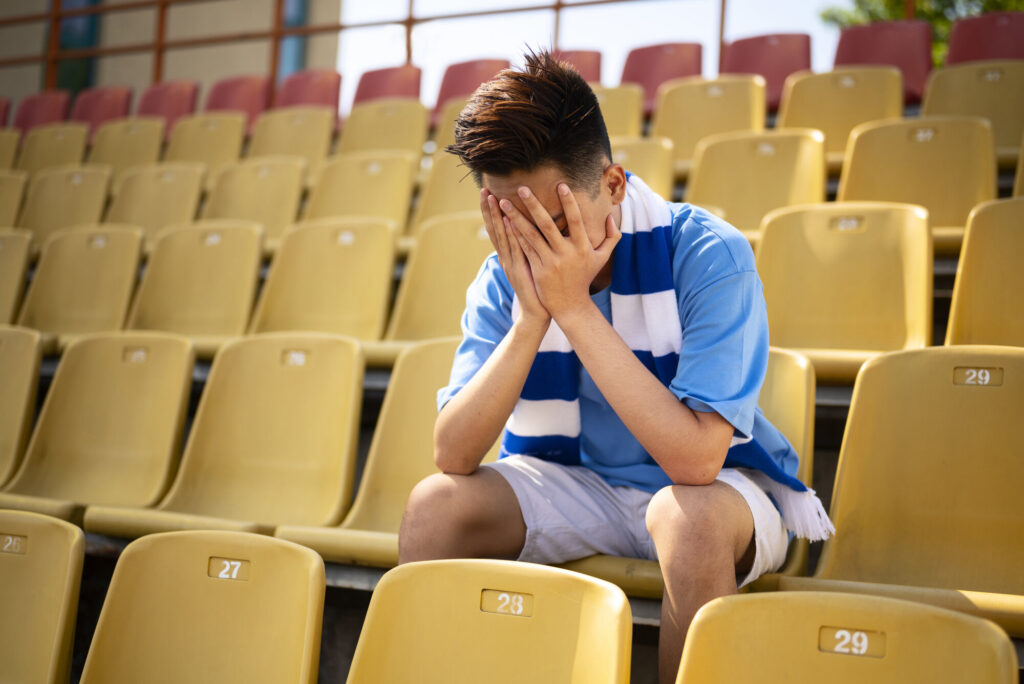
Should kids specialize in one sport—or is it better for young athletes to play multiple sports?
It’s one of the biggest decisions facing sports parents today.
As youth sports have become increasingly competitive, families can feel pressure to choose one sport earlier, join year-round programs, attend specialized training, and dedicate more time and resources to helping their child keep up.
The reasoning seems logical: If my child wants to get better, shouldn’t they spend more time practicing their sport?
But when it comes to early sports specialization, more isn’t automatically better.
Research and guidance from the American Academy of Pediatrics (AAP) caution that specializing too early can have physical and psychological consequences. For most young athletes, the evidence does not support treating early specialization as the automatic path to long-term athletic success.
This is one of the questions Alex Compton and Kevin Dalafu explore in Episode 7 of the Parenting Athletes Podcast.
Here’s a closer look at what parents of young athletes should know about sports specialization, multisport participation, overuse injuries, burnout, and long-term athlete development.
What Is Early Sports Specialization?
Sports specialization generally refers to intensive, year-round training in a single sport while limiting or excluding participation in other sports.
There’s an important distinction between a child simply having a favorite sport and becoming highly specialized.
A young athlete might love basketball more than anything else and still:
- play soccer during another season,
- swim during the summer,
- participate in recreational activities,
- take breaks from organized basketball,
- and spend time simply playing.
Specialization becomes a bigger consideration when training in one sport becomes intensive and year-round and participation in other sports or activities becomes increasingly limited.
That’s where sports parents need to look beyond the assumption that more training at a younger age automatically creates better athletes.
Is Early Sports Specialization Good for Kids?
For most young athletes, early specialization is not considered the default best path.
The AAP’s clinical report on sports specialization and intensive training states that specialization occurring too early can have detrimental physical and psychological effects.
The organization recommends encouraging young athletes to participate in multiple sports and delaying specialization in most sports until later adolescence.
Johns Hopkins Medicine, summarizing AAP recommendations, advises delaying specialization in a single sport until approximately 15 or 16 years old in most cases.
That doesn’t mean turning 15 suddenly makes specialization appropriate. Nor does it mean every sport, athlete, and developmental pathway should follow exactly the same timeline.
The larger message for parents is simpler: There usually isn’t a need to rush.
Why Are Kids Specializing in Sports Earlier?
Youth sports have changed considerably.
Competitive clubs, travel teams, private coaching, showcases, rankings, recruiting, and year-round training can make parents feel as though their child will fall behind if they don’t commit early.
That creates an understandable fear: If everyone else is specializing, will my child lose their opportunity if we don’t?
The AAP has specifically addressed the increasing professionalization of youth sports, noting that high training volumes and pressure to specialize can contribute to concerns including overuse injuries, overtraining, and burnout.
For sports parents, this is an important distinction. What feels necessary because everyone around you is doing it isn’t necessarily what research suggests is best for your child.
Early Sports Specialization and Overuse Injuries
One of the major concerns surrounding youth sports specialization is repetitive physical stress.
Playing the same sport year-round can mean repeating many of the same movements over and over.
A baseball player throws. A basketball player jumps, cuts, and lands. A tennis player repeatedly serves and swings.
A young athlete’s body is also still developing.
The AAP identifies overuse injury as one of the potential consequences associated with intensive training and early specialization.
This doesn’t mean specializing guarantees an injury. It means parents should recognize that training volume, repetitive loading, insufficient recovery, and specialization can create risks that deserve attention.
More training isn’t useful if the athlete’s body isn’t given enough opportunity to recover from it.

Sports Specialization and Burnout
The risks aren’t only physical. There’s also a psychological side to early sports specialization.
The AAP has identified burnout and overtraining among the concerns associated with intensive youth sports environments and pressure to specialize.
Think about what year-round specialization can mean for a child: practices, private training, games, travel tournaments, camps, strength sessions, more practices, more tournaments—and then another season of the same sport begins.
Something that started because a child loved to play can gradually begin to feel like a job.
That’s an important warning sign for parents. Development shouldn’t come at the expense of a child’s desire to keep playing.
If the pursuit of becoming a better athlete eventually makes the child no longer want to be an athlete, something has gone wrong.
What Are the Benefits of Playing Multiple Sports?
For many young athletes, multisport participation gives them exposure to different movements, environments, coaches, teammates, challenges, and ways of competing.
A basketball player who also plays soccer experiences different movement demands. A baseball player who swims challenges the body differently. A football player who plays basketball encounters different spatial and coordination demands.
Variety can also provide a psychological change of pace. Instead of twelve months of the same practices, expectations, competitive environment, and repetitive movements, another sport can make athletics feel new again.
However, it’s important not to overstate what the evidence says. Research does not establish that playing multiple sports is always superior for every athlete in every sport. There are individual differences and sport-specific developmental pathways.
What the AAP guidance does support is caution against making routine early specialization the default approach for most children.
The question isn’t necessarily: “How many sports should my child play?”
A better question may be: “Are we giving our child enough variety, recovery, development, and enjoyment before asking them to narrow their athletic world?”
Does Playing Multiple Sports Hurt Athletic Development?
One of the biggest concerns parents have is that a multisport athlete won’t develop quickly enough in their primary sport.
It’s understandable. When another child is practicing basketball twelve months a year, allowing your basketball-loving child to spend a season playing soccer can feel like falling behind.
But youth athlete development isn’t simply a race to accumulate the most repetitions at the youngest age.
The AAP’s recommendations explicitly caution against assuming early specialization is necessary for long-term success in most sports. This gives parents permission to think longer-term.
Instead of asking: “How good can my child become this year?”
Consider asking: “What kind of athlete—and person—are we trying to develop over the next ten years?”
Those questions can lead to very different decisions.
At What Age Should Kids Specialize in One Sport?
There isn’t one universal age that works for every child and every sport. That’s important. Some sports have developmental pathways and peak-performance timelines that differ substantially from others.
But for most sports, AAP guidance recommends delaying specialization until later adolescence. Johns Hopkins Medicine summarizes that recommendation as approximately age 15 or 16 for most athletes.
So parents shouldn’t treat 15 or 16 as a magical cutoff. Instead, consider it within a broader developmental framework.
Before specialization, ask:
Does my child actually want this?
Is the decision being driven by the athlete or primarily by adults?
Are they physically prepared for the training demands?
Are they still enjoying the sport?
Are they getting adequate rest and recovery?
Is specialization necessary for this particular sport and stage of development?
What opportunities will they give up by specializing?
The answers matter more than simply reaching a certain birthday.
There Are Exceptions to the Rule
Not every sport follows the same developmental pathway.
Some sports traditionally involve earlier skill development and earlier peak-performance timelines than others. That’s why statements such as “children should never specialize before 15” go beyond what the evidence can responsibly support.
The better evidence-based message is: Early specialization should be the exception, not the automatic assumption.
Parents should consider the individual athlete, sport, physical development, emotional readiness, training environment, and long-term goals.
And most importantly, specialization should not simply happen because adults are afraid a child will “fall behind.”
Is Your Child Choosing Specialization—or Are the Adults?
There’s another question that research statistics alone can’t answer: Whose dream is this?
A child who repeatedly asks for more training because they genuinely love their sport is in a different situation from a child being moved from private lesson to travel tournament to skills camp because adults believe that’s what success requires.
Young athletes need opportunities to develop ownership over their athletic journey. That means parents sometimes have to separate what our child wants from what we’re afraid they’ll miss.
This can be difficult in competitive youth sports environments. But long-term development isn’t only about creating better skills. It’s also about developing athletes who still want to participate.
Warning Signs That Specialization May Be Becoming Too Much
There isn’t one checklist that determines whether a child should specialize, but parents can pay attention to changes in their young athlete.
Ask whether your child is:
Constantly dealing with pain or recurring injuries
Training year-round without meaningful breaks
Losing enthusiasm for a sport they previously loved
Participating primarily because they don’t want to disappoint adults
Becoming emotionally exhausted by practices or competitions
Giving up other activities they genuinely enjoy because they feel they “have to” train
Under increasing pressure to perform rather than develop
Any one of these doesn’t automatically mean a child needs to quit or switch sports. They are reasons to pay closer attention.
A Better Framework for Youth Sports Parents
Instead of asking “How early should my child specialize?” try asking five different questions.
1. DEVELOPMENT
Is this helping my child develop—or simply helping them accumulate more training hours? More isn’t always better.
2. ENJOYMENT
Does my child still genuinely enjoy playing? Love of the game matters for long-term participation.
3. VARIETY
Is my child developing through different movements, activities, environments, and challenges? Variety can have physical and psychological value.
4. RECOVERY
Does my child have meaningful time away from this sport? Development requires recovery as well as training.
5. OWNERSHIP
Who wants this level of commitment most—my child, or the adults around them? The answer may tell you something important.
Sports Parents Don’t Have to Win the Race to Specialize
Youth sports can create tremendous urgency. Make the team. Get the private coach. Join the travel program. Attend the showcase. Don’t miss the offseason. Don’t fall behind. Specialize. More. Earlier.
But childhood athletic development isn’t necessarily improved by doing everything as soon as possible.
The AAP’s guidance gives parents an important reason to resist that pressure. For most young athletes, early sports specialization doesn’t need to be the default path.
There can be time for different sports. Time for different movements. Time to rest. Time to play without being coached. And time for children to discover for themselves which sport—if any—they eventually want to pursue more seriously.
What the Research Means for Parents of Young Athletes
The research doesn’t tell us that every child must play three sports. It doesn’t tell us specialization is always harmful. And it doesn’t give us one perfect age that applies to every athlete.
It gives parents something more useful: permission to question the rush.
The American Academy of Pediatrics cautions that early specialization can have physical and psychological consequences and recommends delaying specialization in most sports until later adolescence. AAP guidance also identifies concerns around high training volumes, overuse injury, overtraining, and burnout in increasingly professionalized youth sports environments. And Johns Hopkins Medicine summarizes AAP guidance as recommending that most young athletes delay specializing in one sport until approximately age 15 or 16.
So perhaps the better question isn’t: “How early can my child specialize?”
It’s: “How long can we keep their development broad, healthy, and enjoyable?”
For most families, there is no need to rush the answer.
Listen to Episode 7: Should Kids Specialize in One Sport?
Should your child focus on one sport? Will playing multiple sports cause them to fall behind? And how can parents balance athletic development with the risks of overtraining, overuse injuries, and burnout?
Alex Compton and Kevin Dalafu explore these questions in Episode 7 of the Parenting Athletes Podcast, as part of a broader conversation about sports specialization, parenting young athletes, youth athlete development, burnout, and raising healthy competitors.
Because when it comes to youth sports development, earlier and more aren’t automatically better.
Research & References
American Academy of Pediatrics. Sports Specialization and Intensive Training in Young Athletes. Pediatrics, 2016;138(3):e20162148. Clinical guidance addressing sports specialization, intensive training, overuse injury, burnout, and recommendations for young athletes.
American Academy of Pediatrics. Professionalization of youth sports can lead to burnout, overuse injuries. AAP News. Discussion of how high training volumes and pressure to specialize within youth sports can contribute to overuse injury, overtraining, and burnout.
Johns Hopkins Medicine. Youth Sport Specialization. Overview of youth sports specialization and associated injury concerns, including a summary of AAP recommendations to delay specialization until approximately age 15 or 16 for most young athletes.